
Microsoft Agent Framework
The latest news from the Microsoft Agent Framework team for developers
Latest posts
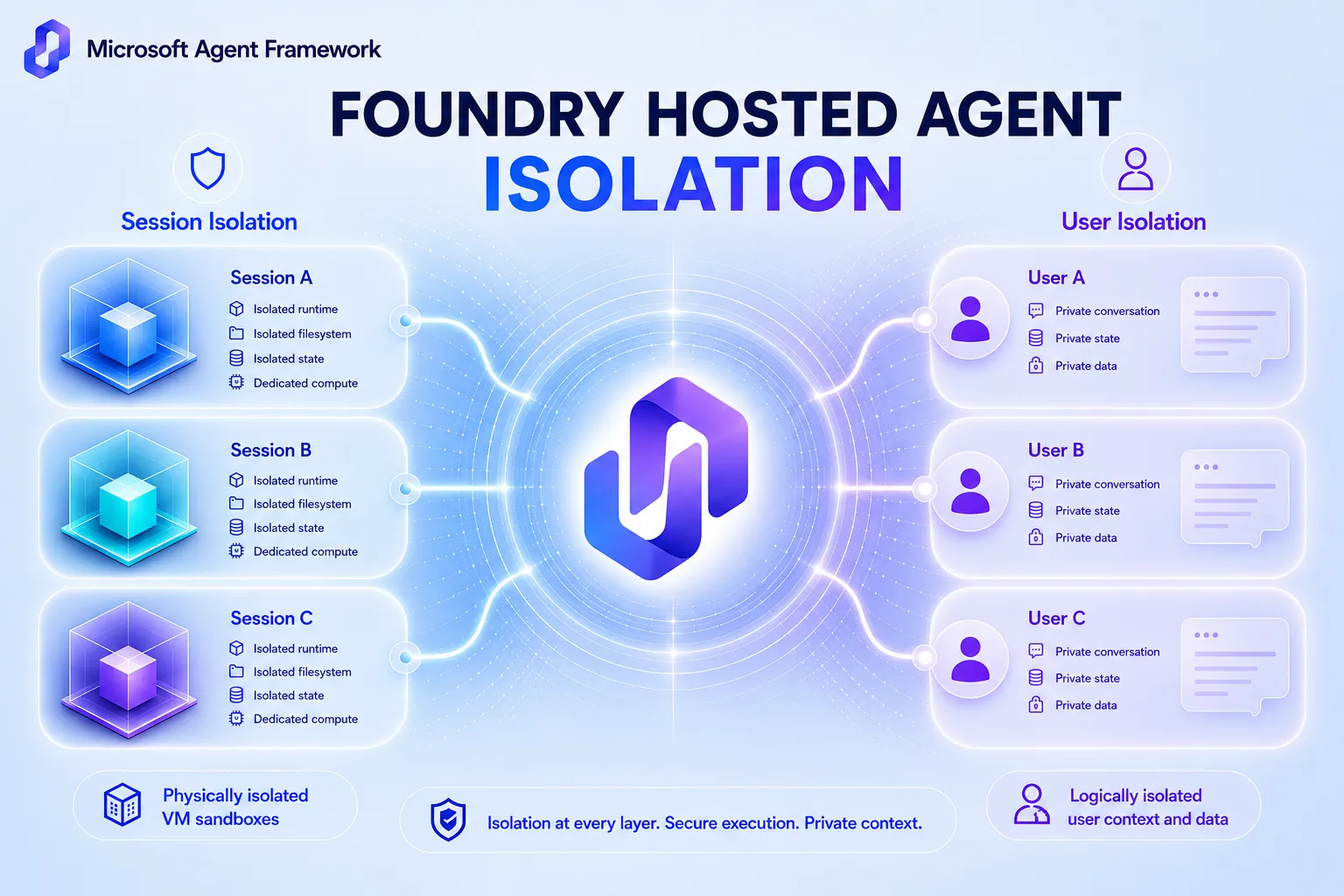
Foundry hosted agent isolation with Microsoft Agent Framework


Foundry hosted agent isolation exposes two independent controls. User isolation identifies whose data may be used. At the same time, Foundry hosted session isolation identifies where code and files continue to live. For each control, Foundry can resolve the value or the application can provide it. Therefore, the available choices support direct callers, trusted middle tiers, application-managed sessions, and shared session pools. While Foundry hosted agents are generally available in Microsoft Foundry, the AgentServer SDKs and the Microsoft Agent Framework Foundry hosting packages for .NET and Python are stil...
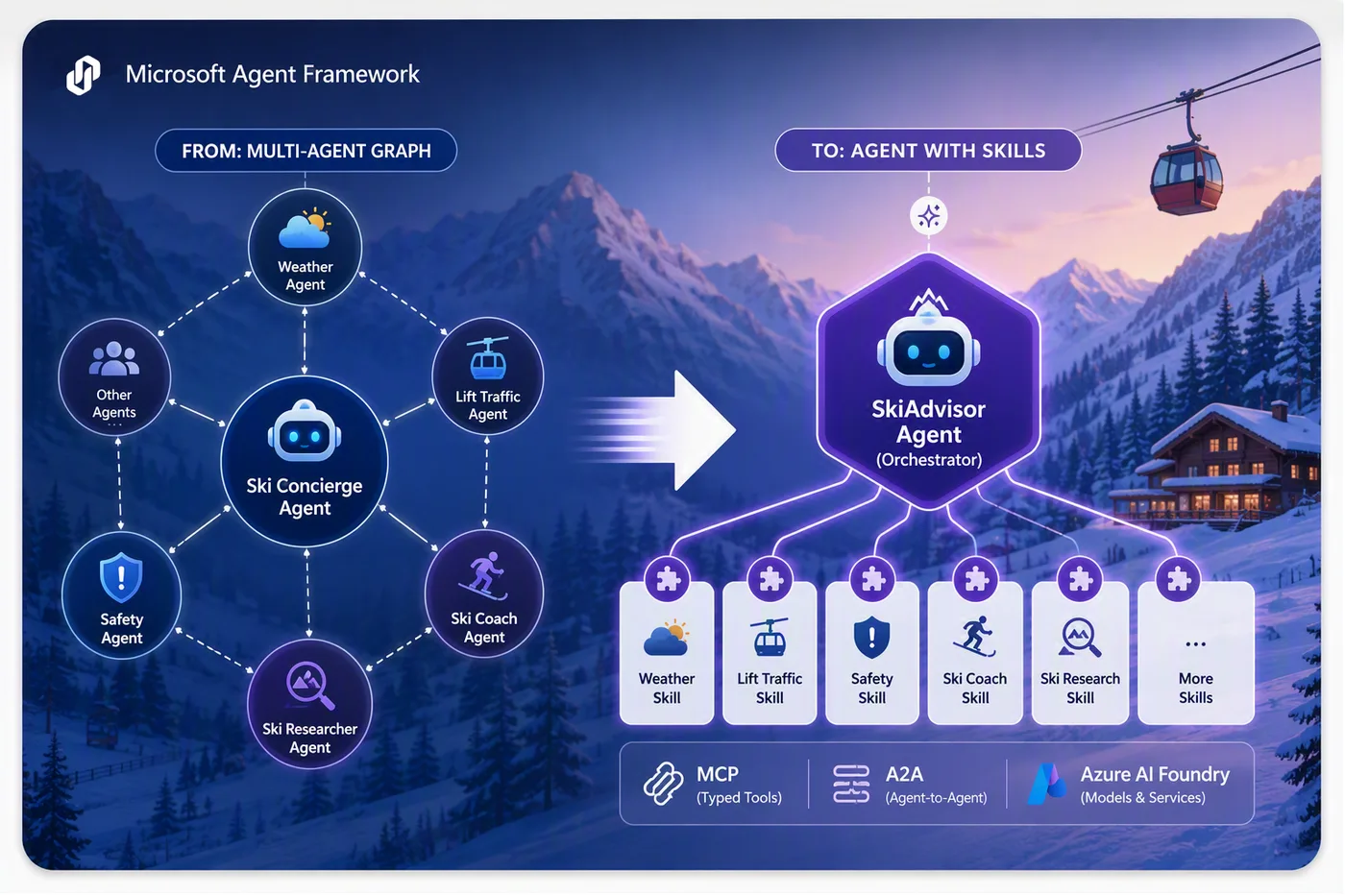
From Specialist Agents to Distributed Skills over MCP

Keep your domain services distributed. Move the specialist's instructions, not another model, into the orchestrator. A multi-agent system often starts with a straightforward design: one agent understands the user's request, delegates to specialist agents, and combines their answers. That was the starting point for my ski resort demo. A resort advisor calls specialists for weather, safety, ski coaching, and lift traffic. Each specialist owns its instructions and tools, and the advisor invokes it through Agent-to-Agent (A2A). It works. But it also raises a useful question: Does every specialist need its...
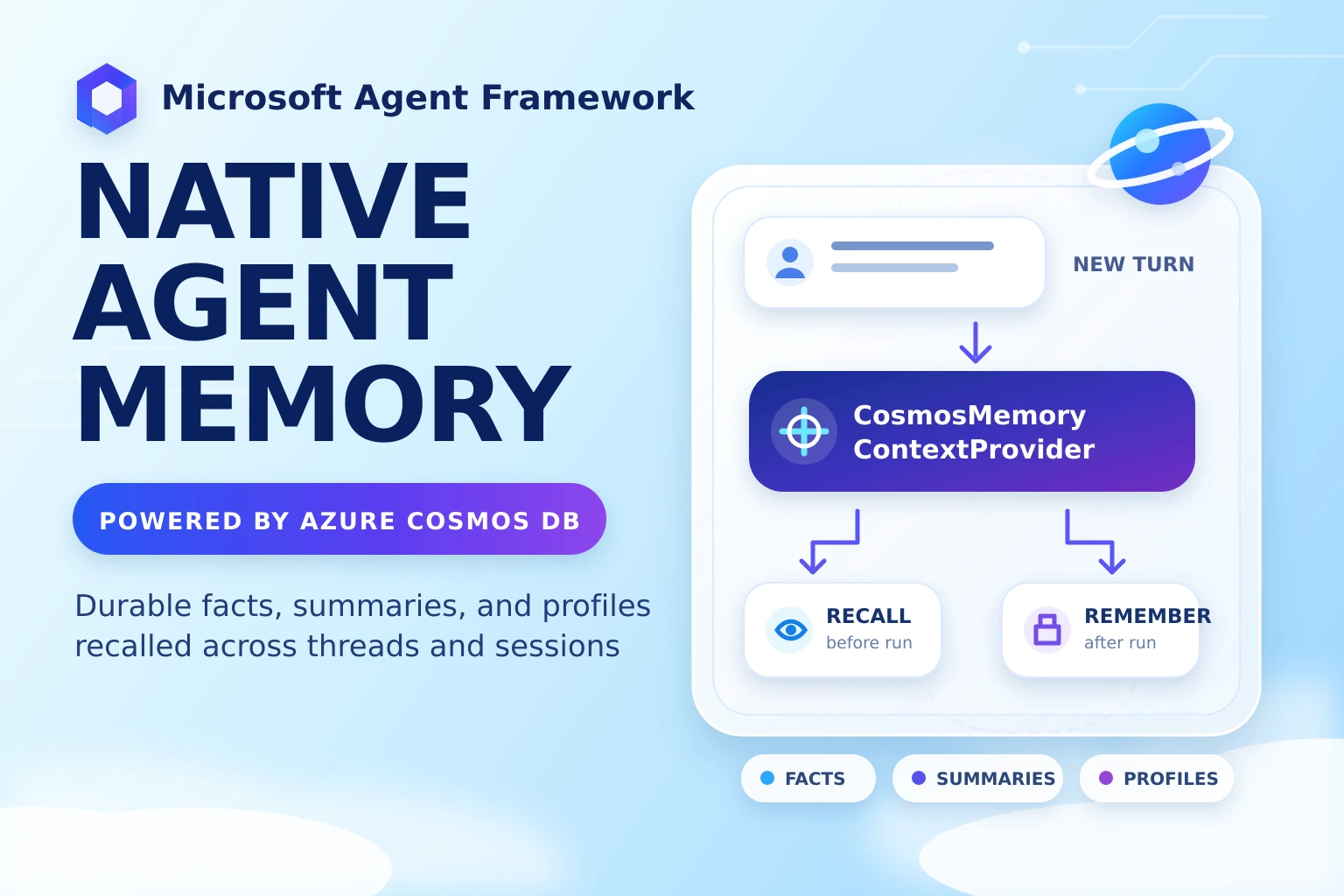
Native memory for Microsoft Agent Framework with Azure Cosmos DB


Agents are more useful when they can remember what matters beyond the current conversation. Today, we're announcing a new preview integration that gives Microsoft Agent Framework agents durable, cross-session memory backed by Azure Cosmos DB. The new Python package, , provides . Attach it to an agent once and it can automatically store conversation turns, extract durable memories, and recall relevant facts, summaries, and user profiles in later conversations. This integration was introduced by the Azure Cosmos DB team in Native Agent Memory for Microsoft Agent Framework, Powered by Azure Cosmos DB. Here, we...
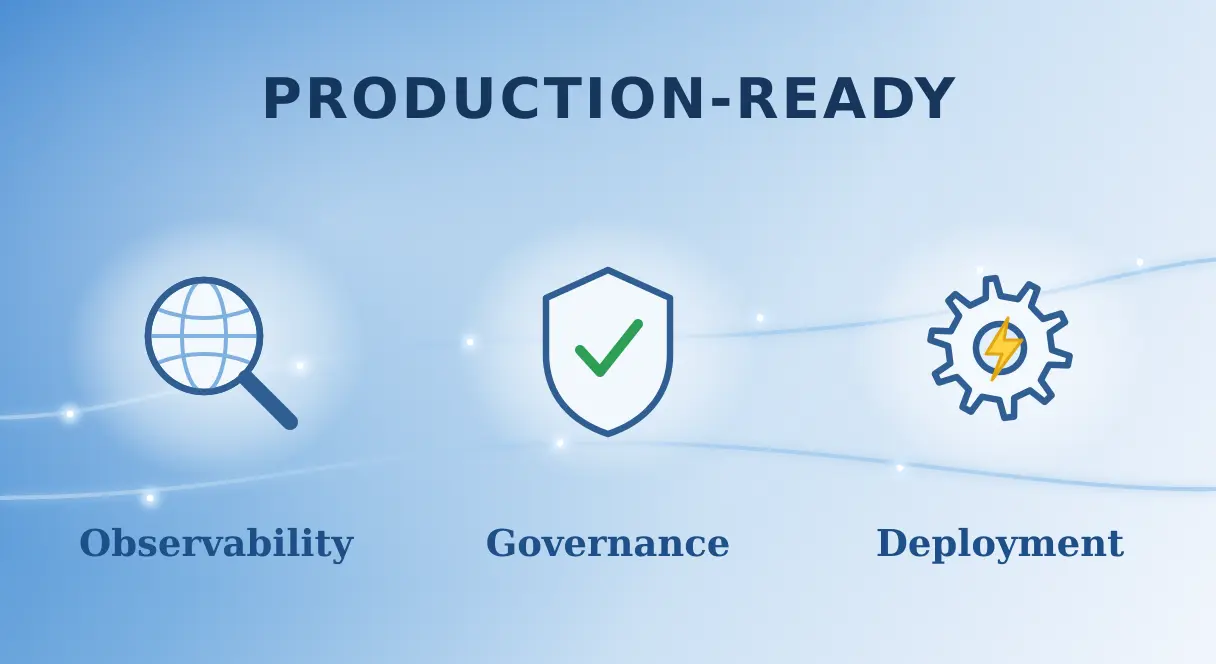
Agent Harness: Making your claw production-ready
Part 4 of Build your own claw and agent harness with Microsoft Agent Framework. Over the last three parts our personal finance assistant grew from a single tool into a genuinely capable agent: it plans, reads your portfolio, asks before it trades, remembers what matters, loads skills on demand, reorganizes files with a shell, computes with CodeAct, and fans research out to background agents. It works on your machine. But "works on my machine" isn't the same as ready to run for other people. This final part closes that gap along four axes: To get there we make one structural change. Up t...

Introducing agent and workflow channels
An agent or workflow is only useful when people and other systems can reach it through the interfaces and channels they already use. That might be an OpenAI Responses client, Telegram, another agent using A2A, or an MCP client. As a builder of agents and workflow, you need control over which channels you expose it to and how it behaves. To help, we're introducing channels in Microsoft Agent Framework for agents and workflows in Python. Choose the channels your application needs The new packages are organized around a small shared hosting core and a set of channel-specific integrations: ...
Build Production-Ready Agents with the GitHub Copilot Harness and Agent Framework

Developers increasingly want to build agents that can reason about code, modify files, execute commands, interact with developer tools, and work across entire repositories. While GitHub Copilot already provides a powerful coding harness for these scenarios, developers often need additional capabilities such as observability, middleware, approval workflows, enterprise governance, and integration with broader agent ecosystems. The GitHub Copilot integration in Microsoft Agent Framework brings these worlds together. You can now use GitHub Copilot's agentic harness as the execution engine for your agents while conti...
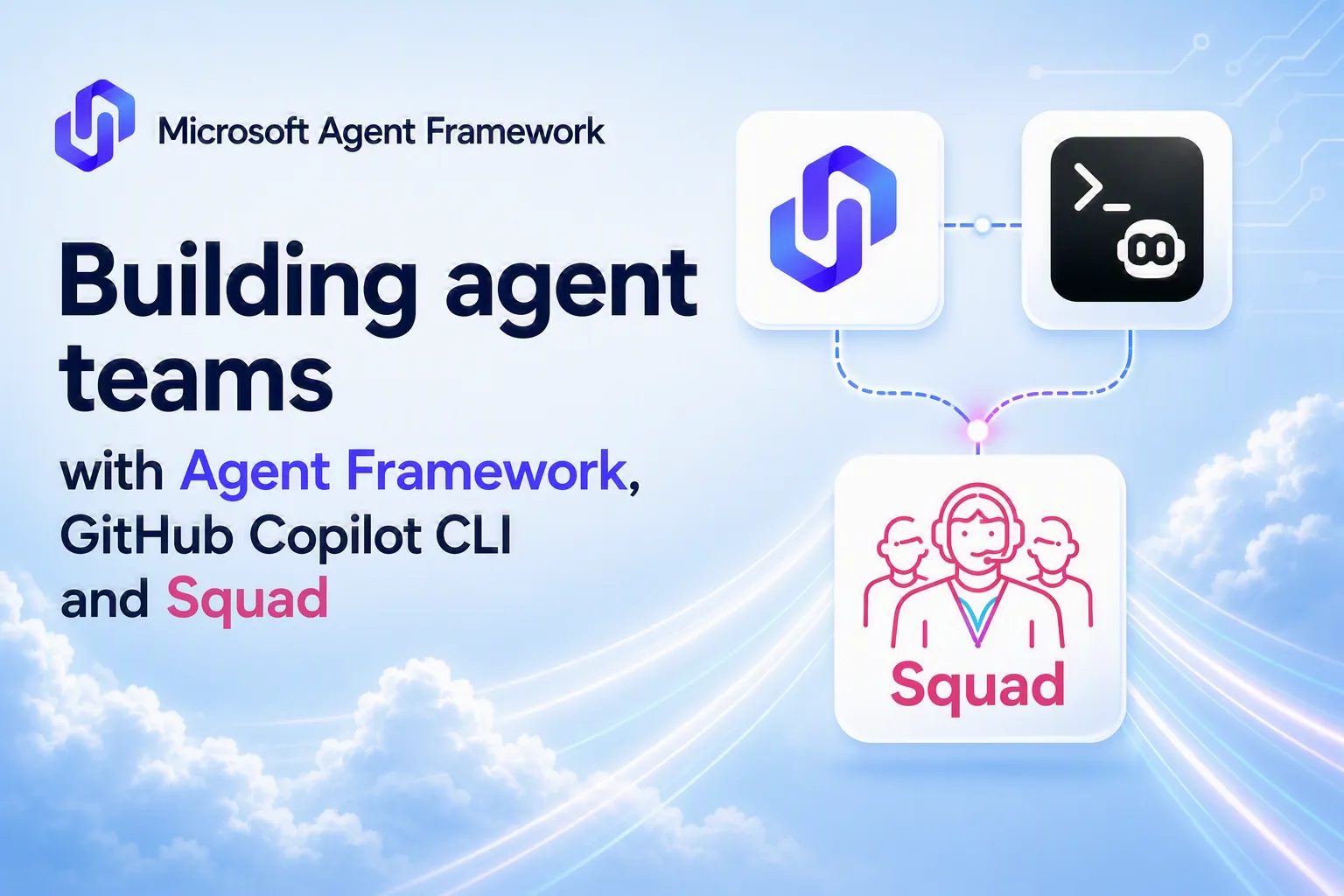
Building agent teams with Agent Framework, GitHub Copilot CLI and Squad


Microsoft Agent Framework supports creating agents that use the GitHub Copilot SDK as their backend. GitHub Copilot agents provide access to powerful coding-oriented AI capabilities, including shell command execution, file operations, URL fetching, Model Context Protocol (MCP) server integration, and can be integrated into your existing development pipeline. We recently shipped this integration to v1.0 in C# and Python - fully supported and stable. Find out more here: MS Learn | Agent Framework | GitHub Copilot Agents and check out the samples here: .NET | Python A great example of using MAF and GitHub Copi...
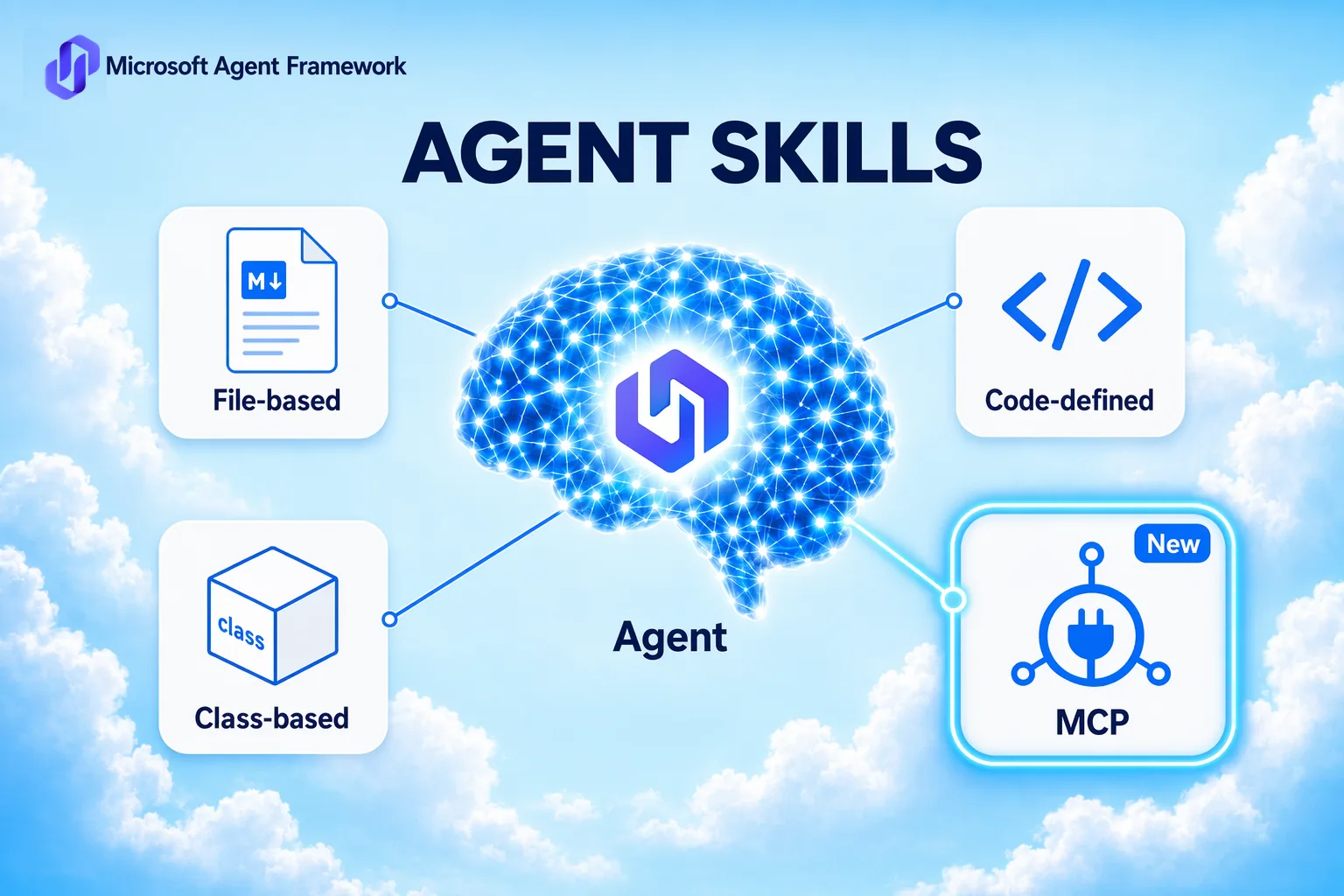
Discover Agent Skills from MCP servers in .NET

Your agents can now discover and load Agent Skills directly from a Model Context Protocol (MCP) server. Instead of shipping every skill inside your application or copying skill folders into each deployment, you point an agent at an MCP server and it pulls the skills it needs on demand. A central team can publish skills once, and every agent across your organization picks them up without a redeploy. This is available today in .NET through the package. For makers, this removes a distribution problem: you author a skill in one place and serve it to many agents. For enterprise leaders, it means domain expertise –...

Move Agent Orchestration/Workflows out of Code with Agent Framework Declarative Workflows 1.0

Most multi-agent apps wire every flow in application code: the sequence of steps, branching, and handoffs between agents all live inside the program, making the orchestration harder to review, version, and change. Declarative workflows make that orchestration explicit. In YAML, you define how agents coordinate, how state changes, where execution branches, and when people step in. Agent Framework loads the definition into a standard workflow you can run, stream, and compose with code. Today, declarative workflows reach 1.0 across both Agent Framework SDKs. Python's package is now 1.0.0, joining th...