

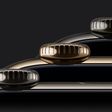
Like the iPhone 17 Pro models, the new iPhone 18 Pro and iPhone 18 Pro Max have three rear cameras – a 48MP Fusion Main lens, an 8x48MP Telephoto lens, and a 48MP Ultra Wide lens. They also share the same focal lengths and resolutions as their predecessors. The big upgrade this year though is the new variable aperture on the Main camera. Let's dive in.

Aperture is what controls how much light enters the lens and hits the sensor. If too little light hits that sensor, images tend to be blurry and/or grainy. To compensate, the shutter has to stay open longer, or it has to turn on Night Mode. The problem with this approach is that the longer the shutter stays open or Night Mode is engaged, the more likely that the imagery will be blurry. Even still photos can lack sharpness and definition.
The solution is to use a variable aperture lens that is physically able to let more or less light in depending on the shot, which in turn allows for variations in shutter speed. The iPhone 18 Pro models can do this automatically, or you can take over the process manually for more stylistic control.
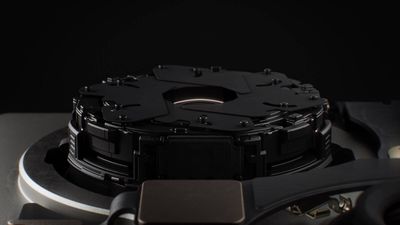
To achieve this, the iPhone 18 Pro and iPhone 18 Pro Max trade a fixed ƒ/1.78 aperture for a four-stop variable aperture ranging from ƒ/1.48 to ƒ/4.0, delivering around 50 percent better low-light performance and giving photographers optical control over depth of field that the iPhone has never offered before.
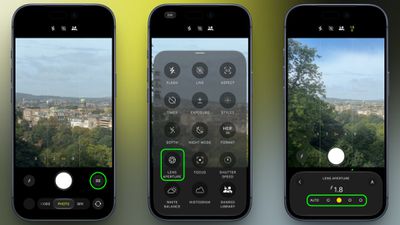
As mentioned, you can leave the iPhone 18 Pro to do its thing with the new variable aperture, or you can take control of it manually. Here's how it's done:
- In the Camera app, tap the button with six dots at the bottom-right of the interface.
- Select Lens Aperture from the control pane.
- Tap one of the four circles to set the aperture: from left to right they range ƒ/1.48, ƒ1.8, ƒ2.8, and finally, ƒ/4.0.
- If you change your mind, tap the Auto button on the left to let the iPhone automatically control the aperture.
Try experimenting with different aperture settings to see how they affect your images. The ƒ/1.48, for example, produces a more shallow depth of field, while the ƒ/4.0 will have more of the image in focus.
Just remember that with a variable aperture, the lower the f-number, the wider the aperture and the more light reaches the sensor. That allows the camera to use a faster shutter speed in the same lighting conditions, while also producing a shallower depth of field. By contrast, the higher the f-number, the smaller the aperture, letting in less light but increasing the amount of the scene that can remain in focus. The latter can be useful for landscapes and group shots, for example.









































Top Rated Comments
You ignored ISO, which has more impact on the sharpness and definition of a digital image than "shutter speed." The higher the ISO—which on digital sensors is the electrical current running through the sensor (as opposed to film where ISO is the light sensitivity of the chemicals)—the more noise the image has. The lower the light coming in through the lens to the sensor, the higher the camera has to crank the ISO in order to capture the same amount of information. That's why low light images are less sharp and have a lot of noise.
The fact that the aperture is mechanically variable is not what's improving light performance here, it's the widening of the opening at maximum to ƒ/1.48 that's accomplishing that (which could have been done without the variable aperture, it's just a bigger opening). The ostensible benefits of variable aperture are the control of depth-of-field (which is not going to be very noticeable because ƒ/1.48 to ƒ/4.0 is really not a big difference even on a pro camera), sharper images at higher ƒ-stops (because lenses tend to be at their optical weakest when the aperture is wide open), and the ability to create hexagonal lens flare effects.
Basically, as several reviewers have pointed out this week, a variable aperture is a good talking point but is not going to make a noticeable difference outside of some fringe use cases.
The fact that the new iPhones have "variable aperture" does not, in and of itself, give the camera any superior low-light capability. That is a function of several factors, including the sensitivity of the sensor, and how wide the aperture is. If you keep the sensor's sensitivity the same, then a wider aperture will let in more light than a narrower aperture. But a variable aperture *closes down* the aperture, thus letting in less light.
Now, a narrower aperture has its uses. All else equal, a narrower aperture will create greater depth of field. That is to say, more of the image will be in focus with a narrowed aperture, vs. a wider aperture. This has merit.
Also, a narrower aperture uses less of the lens. (This is a simplification.) This can also lead to sharper images.
But this is not how the variable aperture feature is described in the literature that I have read thus far.
I am not saying that the variable aperture feature has no merit. I haven't yet had a chance to try it, so I have no direct experience with it. However, its uses are different from what the ad copy suggests that it is.
4x = 48 MP
8x = 12 MP
This has fixed the biggest complaints I've had for the last few generations.